

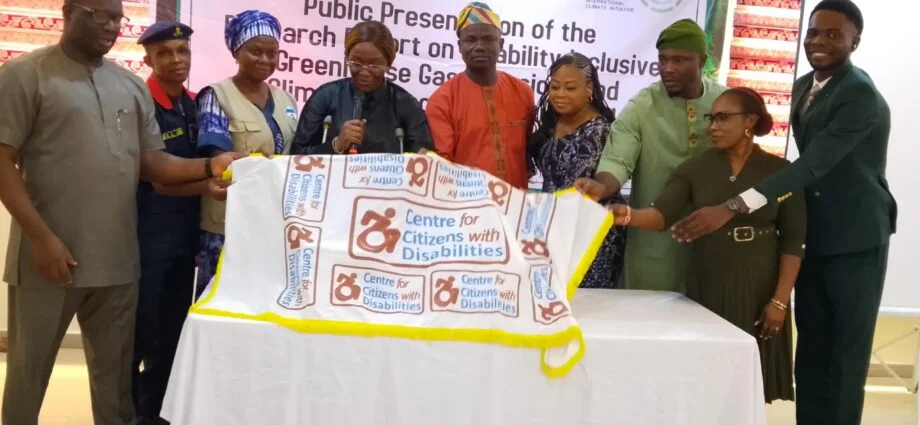
The Centre for Citizens with Disabilities (CCD) has presented a research report highlighting the disproportionate effects of climate change on persons with disabilities in Nigeria and called for stronger implementation of inclusive climate policies.
The report, which examines the experiences and priorities of persons with disabilities, underscores the need for governments and other stakeholders to ensure that climate-related programmes and interventions are accessible to everyone.
The research drew on the experiences of 104 persons with disabilities in Abia State and examined how climate change affects their livelihoods, agricultural activities, health and general wellbeing. The study found that poverty, declining agricultural productivity and disruption of livelihoods were among the major climate-related concerns identified by participants.
According to the findings, persons with disabilities face additional barriers when attempting to respond to climate-related emergencies and other environmental challenges.
These barriers include stigma and discrimination, limited participation in decision-making, inadequate access to climate information and a shortage of resources designed with the needs of persons with disabilities in mind.
The report also noted that climate-related measures such as emergency warnings, disaster response services, shelters, transportation and other support systems were often not sufficiently accessible to persons with disabilities.
The researchers stressed that addressing these gaps requires the active participation of persons with disabilities in the design, implementation and monitoring of climate policies.
They recommended greater awareness of the relationship between disability and climate change, as well as the development of inclusive disaster-risk reduction programmes.
The report further called for accessible early-warning systems, suitable emergency shelters and transportation arrangements that take the needs of persons with disabilities into consideration.
Inclusive and sustainable livelihood programmes were also identified as a priority, particularly in areas where climate change is affecting agriculture and employment opportunities.
The researchers urged authorities to strengthen social protection programmes for persons with disabilities, including support that can be activated during extreme weather events, alongside improved access to healthcare, education and climate-related information.
The study also emphasised the importance of involving persons with disabilities in climate governance and decision-making, arguing that their direct experiences can help policymakers develop more effective adaptation and mitigation measures.
The researchers said climate action should not treat persons with disabilities merely as beneficiaries but should recognise them as contributors, innovators and partners in developing solutions.
They further called for greater investment in disability-inclusive climate action and urged government agencies, civil society organisations and development partners to work together to remove structural barriers that increase the vulnerability of persons with disabilities.
The findings reinforce the need for Nigeria’s climate policies to translate commitments on inclusion into practical programmes that address the specific challenges faced by persons with disabilities.
The researchers concluded that meaningful inclusion would not only strengthen climate resilience among persons with disabilities but could also contribute to building a more equitable and sustainable society.